
I have been in love with yoga philosophy since 2016, when I trained to become a yoga teacher.
In the years leading up to my yoga teacher training, I practiced yoga cautiously, always on the lookout for signs that I was being covertly brainwashed or tricked into believing something harmful. At the time, I still considered myself a Christian, although I was beginning to have serious doubts about my faith. I carried so much fear around studying a philosophy connected to Eastern spirituality because I had been told I should be afraid.
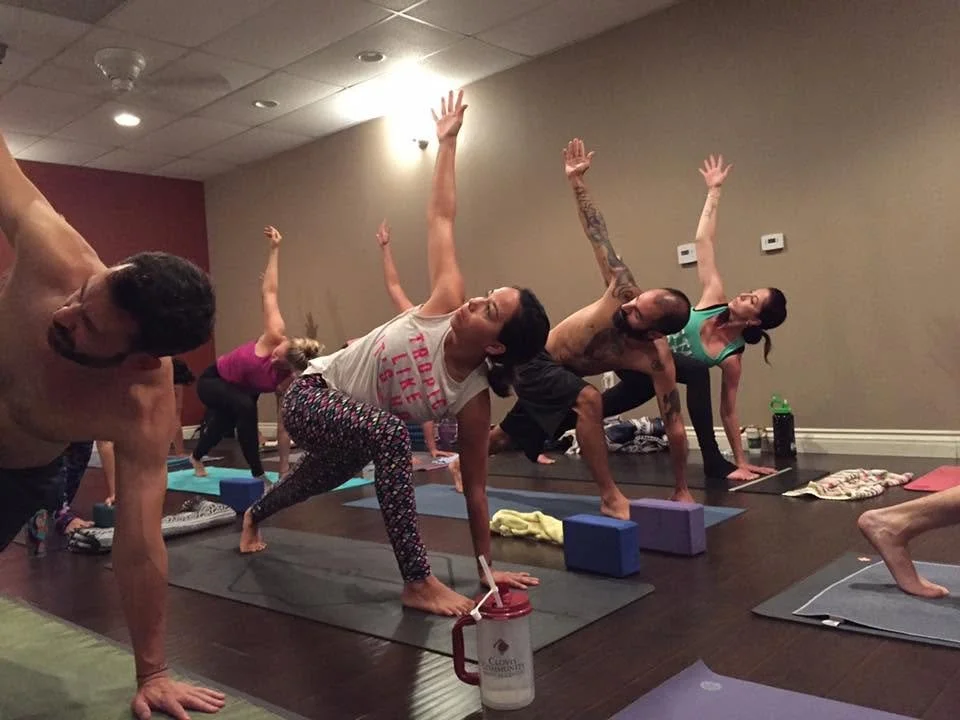
Des in YTT (May 2016)
Learning yoga philosophy was eye-opening, to say the least. For the first time, I realized that Christians weren’t the only people trying to live moral and benevolent lives while following an extensive framework to guide them in their efforts. I felt a little embarrassed that this possibility had never occurred to me, but how could I have known? I had been raised with morals similar to the ones I was learning in my training, but also with so much fear of anyone who was “other” than me and my very specific Christian community.
When I ultimately released my identity as a Christian, along with my faith in the beliefs I had been raised with, it was both freeing and torturous. For nearly three years, I felt like I was free-falling. Everything I had built my life upon had collapsed beneath me, and I couldn’t make sense of my world.
This was when I began reading yoga philosophy through the lens of practical application rather than purely academic study. Suddenly, the texts that had once been eye-opening and interesting became a lifeline; an anchor and a guide for navigating the endlessly challenging situations life was throwing at me. I was experiencing firsthand just how powerful this wisdom remained, even a couple thousand years after it was written.
This reinvigorated passion for yoga philosophy, and particularly The Yoga Sutras, led me to teach it more regularly outside of yoga teacher training—which, unfortunately, seems to be the primary place students are given the opportunity to learn this material. I started teaching Sutra School, an offering I would love to bring back, and the conversations it opened up were so soul-feeding. As fulfilling as Sutra School was, I still felt that the wisdom of The Yoga Sutras needed to be shared more regularly and deliberately in my weekly classes.
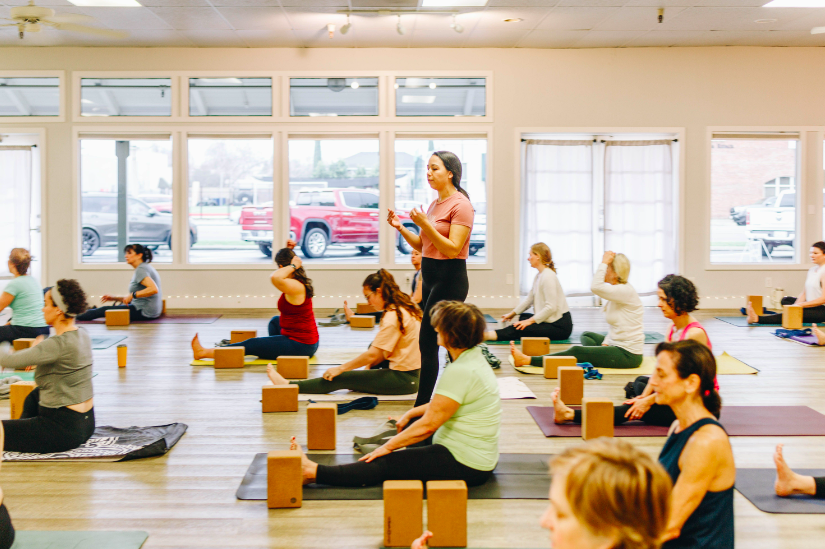
Des, in her element, teaching all the yoga.
A couple of months ago, after co-leading a powerful Summer Sangha retreat focused on Kriya Yoga, a cornerstone practice from The Yoga Sutras, I finally committed to sharing a snippet of the Sutras at the beginning of every class. I am a yoga teacher sharing the practice of yoga, after all! I want my students to hear about the transformative principles of yoga philosophy as often as they hear about downward-facing dog.
As excited as I am to share The Yoga Sutras with my students each week, I know it won’t be for everyone. In fact, a student recently said to me, “Don’t get your feelings hurt, but I don’t need all that deep yoga philosophy. I just need to stretch and exercise.”
The thing is, there are plenty of places where you can just stretch and exercise, and I don’t want Old Town Yoga to be another one of them. The entire reason Old Town Yoga exists is because of the long line of teachers who have taken the time to pass along the full scope of this practice. Their efforts and commitment changed my life completely and for the better. I want to honor their life’s work, and the roots of this practice, by teaching yoga more fully.